
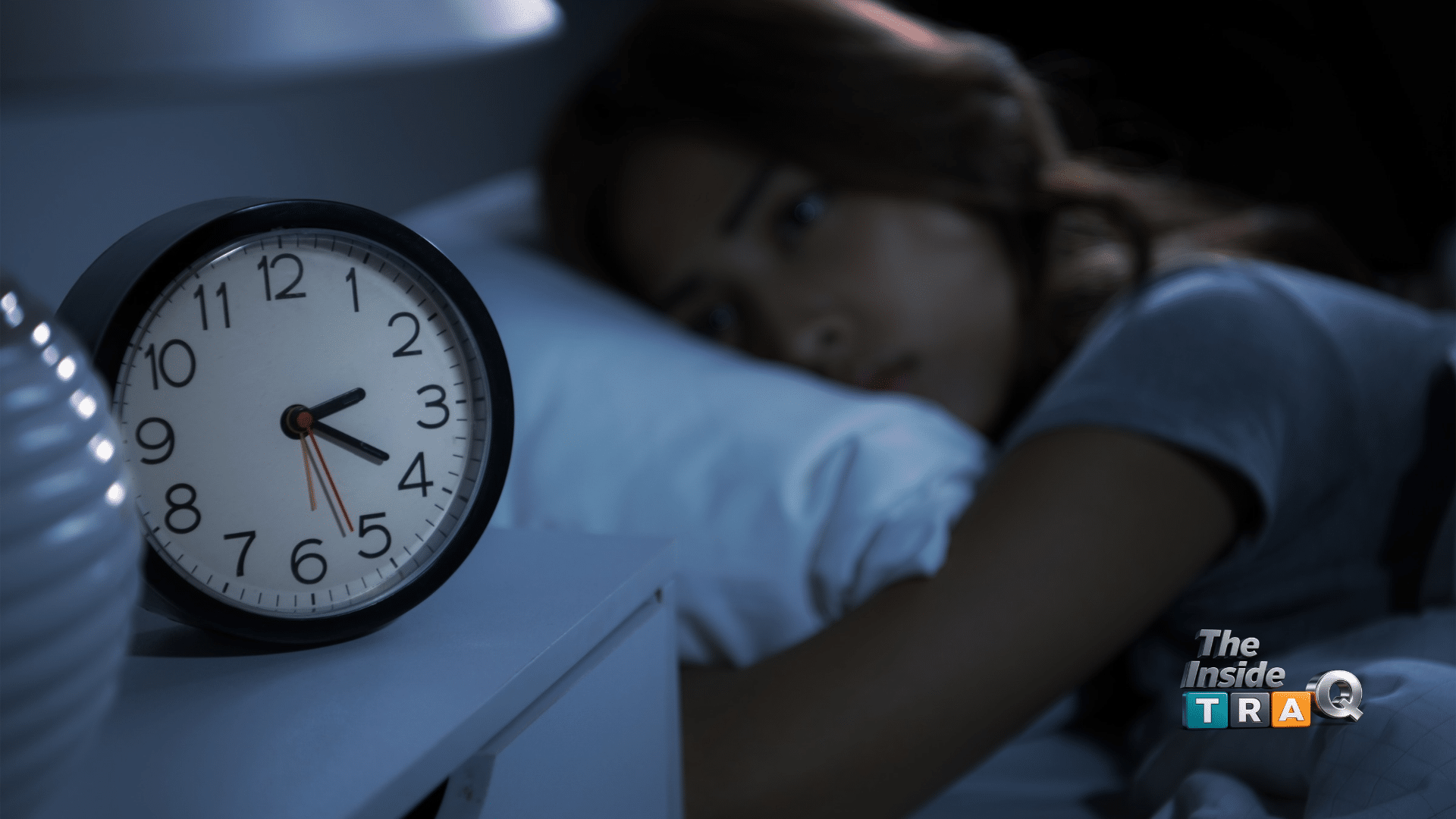
Ask most people to name the pillars of good health and they will say nutrition and exercise. On The Inside TRAQ podcast, host Dr Avron Urison put a different question to guest Dr Alison Bentley: have we underestimated a good night’s sleep as the third pillar? Her answer is that sleep is not passive downtime. Getting enough quality sleep is an active biological process that supports physical repair, brain restoration, daily performance and long-term health. This article follows the conversation from what happens while you sleep to the point where suffering from insufficient sleep, or light sleep, could mean that it is time to see your doctor.
View the full episode on our YouTube channel.
What Happens While We Sleep: The Missing Pillar (Pt 1)
Dr Bentley describes sleep as an active state rather than simple rest. Sleep plays a different role at each of the main sleep stages.
Sleep stage | What it does |
Deep non-REM sleep | Physical repair and growth hormone activity |
REM sleep (rapid eye movement) | Brain restoration, memory processing and vivid dreaming |
The balance shifts across the sleep stages as the night goes on. The deep sleep stage tends to dominate earlier, while REM sleep periods grow longer towards morning. Because each sleep cycle does different work, cutting a night short costs you more than a few hours of missed sleep.
View part 1: Sleep – The Missing Pillar
Why Sleep Matters for Health
The interview shows how far sleep affects the rest of the body. Dr Bentley links consistently poor, insufficient or disrupted sleep with wider health risks, including cardiovascular disease, diabetes, obesity, impaired immune function and cognitive decline. These are associations rather than guarantees. The American Academy of Sleep Medicine and the Sleep Research Society take a similar view in their joint consensus statement (Watson et al., J Clin Sleep Med, 2015), which associates regularly sleeping less than seven hours with adverse health outcomes, including high blood pressure and heart disease. Sleep health deserves the same attention as a healthy diet and regular physical activity.
Her central analogy is that the body and brain need to be serviced every night. Repeated sleep deprivation is the under-servicing of your brain and problems may accumulate over time. A sleep debt, which is a shortfall in the amount of sleep you get, can become a health problem.
How Much Sleep Do We Need?
Seven to eight hours of sleep is an average, not a universal prescription, according to Dr Bentley. How many hours you need is personal: some people naturally need less and others need more sleep. The amount of sleep that leaves one person sharp can leave another flat.
The distinction is how you function the next day because sleep quality is almost more important than the number of hours you were asleep.
Quality sleep shows up in the daytime:
Enough sleep | Not enough sleep | |
On waking | Refreshed | Unrefreshed |
Through the day | Functions well | Fatigue |
Thinking | Memory, concentration and attention hold up | Memory, concentration and attention slip |
When Sleep Goes Wrong (Pt. 2)
The second half of the conversation turns to nighttime concerns and common sleep disorders, from trouble falling asleep to struggling to stay asleep.
These are a few disorders that were discussed:
- Waking at 2 or 3 a.m.
- Struggling to fall asleep again
- Insomnia
- Restless legs
- Possible sleep apnea
Dr Bentley notes that waking during the night is not automatically abnormal, and that people historically slept in two phases, so normal sleep is not always one unbroken block. Attention becomes warranted when the disruption affects your sleep duration, your sleep quality or how you function in the daytime. Persistent problems are called sleep disorders, such as insomnia, restless legs and sleep apnea.
View part 2: When Sleep Goes Wrong!
Creating Better Conditions for Sleep
- Reduce light intensity before bed
- Create a clear transition between waking activity and sleep
- Use the final 30 minutes to help your mind disengage
Light sleep comes first because it is the main signal for your body’s circadian rhythm, the body’s internal clock, which sets the sleep wake cycle. Bright lights late in the evening tell that clock the day is still going, and a disrupted circadian rhythm makes it harder to fall asleep. These steps protect nighttime sleep and sleep quality. It is sleep hygiene in plain terms, and a steady routine is what builds better sleep habits. The aim is quality sleep, which is different from spending more time in bed.
If you wake and cannot fall asleep again, repeatedly trying to force sleep while you stay in bed can make matters worse. Get up, change your environment and do something calming until you feel sleepy again.
Sleep Aids, Medication and Red Flags
The discussion also covers caffeine, nicotine, alcohol, supplements and prescribed sleeping tablets. Caffeine, nicotine and alcohol can all disrupt sleep. Supplements may help some people, but they should not replace healthy sleep habits or a proper assessment. Prescribed sleeping tablets are a decision for you and your healthcare provider.
Warning signs that your sleep quality needs attention:
- A persistent inability to get enough sleep
- Repeatedly waking unrefreshed
- Excessive daytime sleepiness
- Fatigue that interferes with work and daily life
A persistent run of these signs points to low quality sleep or too small an amount of sleep, and only an assessment can say whether one of the sleep disorders above is involved.
If you have ongoing trouble sleeping, the first step is to speak to your GP, who can refer you to another sleep specialist/healthcare provider if needed. Raise persistent sleep problems or suspected sleep disorders early rather than waiting them out.
SOME ADDITIONAL SLEEP FACTS
- Newborns can sleep 14 to 17 hours a day, school-age children need 9 to 12, and adults over 65 need 7 to 8
- At least 10% of adults have chronic insomnia
- Sleep apnea causes repeated breathing interruptions during sleep
- NREM sleep has three stages before REM begins: stage 1 lasts only a few minutes, stage 2 makes up about 45% of the night, and REM typically arrives about 90 minutes after sleep onset
- Deep sleep is when the body repairs muscle tissue and builds proteins
- Sleep helps regulate the hormones that control hunger and metabolism
- Nighttime light exposure lowers melatonin, and blue light from devices can disrupt sleep patterns
- A consistent sleep schedule helps reinforce your circadian rhythm
- An ideal sleep environment is dark, quiet and cool, at roughly 15°C to 20°C
Hear the Full Conversation
Treat a good night’s rest as maintenance. It keeps you functioning during the day and protects your health over the longer term.
Hear it in Dr Bentley’s own words:
Watch Part 1 on The Inside TRAQ Podcast | Watch Part 2 on The Inside TRAQ Podcast