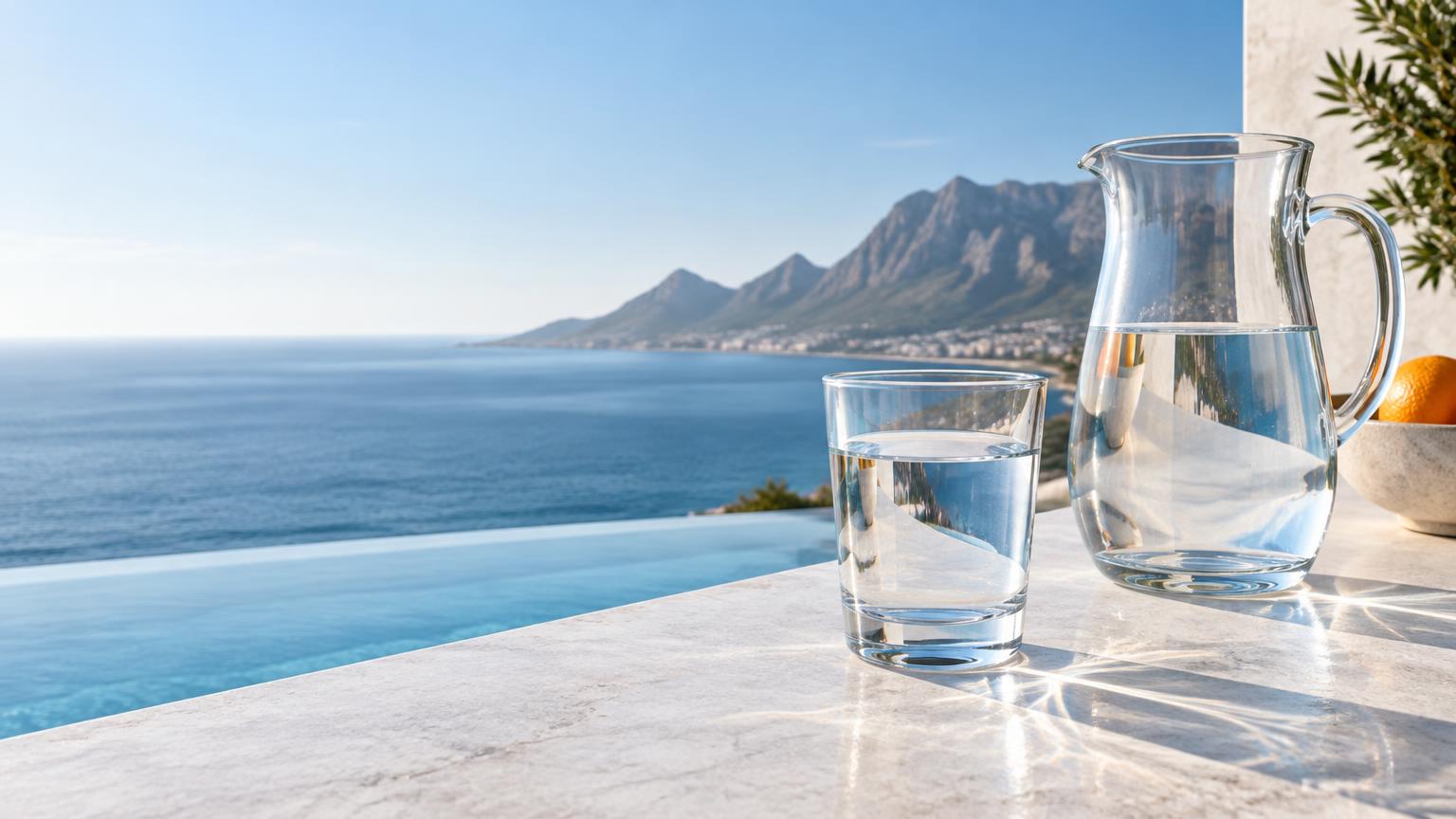

With Gap cover, every policy in South Africa is shaped by the same Demarcation Regulations, so the product has the same limits, the same purpose and the same rules, whoever sells it. Similar to how water is water. Whether it comes from your tap or a premium bottle, it does the same job.
What isn’t the same is the experience. With water, that means how clean, safe and accessible it is. With gap cover, it means how easy it is to claim, how fast you’re paid, and whether someone is there to help when the hospital bills arrive. That is where providers really differ.
In this episode of The Inside TRAQ, nephrologist Dr Shoyab Wadee asks a simple question: is water just water? His answers turn out to be a useful guide to choosing gap cover too.
View the full episode on our YouTube channel.
Water is water, and water is not water
In this episode of The Inside TRAQ, specialist physician and nephrologist Dr Shoyab Wadee was asked a question that sounds too simple to need an expert: is water just water?
His answer was a neat contradiction: "Water is water and water is not water."
On one level, water is the most basic thing there is. Somewhere between 60% and 70% of the molecules in your body are water. It is the solvent that everything else dissolves in, from the electrolytes in your blood to the contents of every cell. Because it matters so much, your body has built several overlapping systems to keep it in balance. Your kidneys get rid of water you don't need. They work with your blood pressure to hold on to water when you are running low. And your thirst tells you to drink when the concentration of minerals in your blood rises.
On another level, water has become a product. Bottled, filtered, alkaline, hydrogen, mineral, electrolyte, even protein water. As Dr Wadee put it, we have long since passed the point where fluids stopped being a health product and became a commercial one.
That tension, between the thing itself and everything sold around it, is a useful way to think about gap cover.
What Dr Wadee says about water
The episode cut through a lot of noise. Here are some of the highlights:
1. How much do you need?
The old "eight glasses a day" works out to roughly 1.6 litres. About 2 litres is reasonable for most healthy adults in a temperate climate. But if your thirst is working, it is the best guide. Most people drink enough.
2. Tea, coffee and cold drinks count.
They all add to your fluid intake. The caffeine in tea and coffee makes you lose a little more water, so you may need slightly more overall.
3. Clean matters more than fancy.
For most of human history, the real danger in water was contamination, mainly from waterborne disease. Clean drinking water has been one of the biggest reasons life expectancy rose so much in the 20th century.
According to Dr Wadee, there is no evidence that hydrogen, ozone or alkaline water is better for you than ordinary clean drinking water.
4. Most people don't need electrolyte supplements.
A reasonable modern diet gives you enough sodium, potassium, magnesium and phosphate, and often too much. Much of your kidneys' work is getting rid of the excess. The exceptions are heavy exercise with a lot of sweating, severe diarrhoea, some illnesses, and diets restricted because of disease. If you need more potassium or magnesium, the answer is fresh fruit and vegetables, not a tablet or a sports drink.
5. Bottled water isn't harmful in itself, but be conscious of the plastic.
Some plastics can leach substances into water, especially when the bottle sits for a long time or gets hot, such as in a car. These substances have been linked to effects on the hormone system, particularly in people who drink a lot from plastic.
If you buy bottled water and won't drink it straight away, Dr Wadee suggests pouring it into a metal container.
6. Home filters are generally not necessary.
But if your tap water looks discoloured, smells or tastes different, especially after work on the pipes, let it run until it clears before you drink it. If you rely on a borehole, have the water tested, filter it and check it regularly.
7. More water isn't a cure-all.
Drinking a bit more can help people who form kidney stones, but it is not the main treatment, and drinking beyond your thirst may help less than people think.
8. Too much water can be dangerous.
Healthy kidneys rarely get overwhelmed, but it can happen. The group Dr Wadee most wanted to warn is endurance runners. In races like Comrades, with water stations every few kilometres, runners who keep drinking plain water without replacing salt can develop hyponatraemia, a dangerously low level of sodium in the blood, which can be life-threatening.
His advice: replace salt as well as water, and drink to thirst rather than out of habit.
9. The people most at risk are those who can't reach water.
Babies can't tell you they are thirsty. Frail older people, especially those over 70, may put off getting a drink because it is painful or difficult to get to the tap. If they have diabetes or kidney problems, dehydration can snowball into confusion, and they can arrive at hospital severely dehydrated.
He ended with five simple rules:
- Let your thirst guide how much you drink.
- Make sure your water is clean, and avoid sources you aren't sure about.
- Drink mineral or electrolyte water only in specific circumstances.
- Eat a balanced diet with plenty of fruit and vegetables.
- Stay away from products that manipulate your water balance, such as diuretics, unless a medical professional advises them.
Keep it simple, he said, and do your research.
Watch the full episode: Is Water Just Water?
Gap cover is gap cover: the product is regulated
Gap cover works a lot like tap water. Whoever supplies it, it has to meet the same standard.
In South Africa, gap cover is shaped by the Demarcation Regulations, issued under the Long-term and Short-term Insurance Acts. These rules decide which health policies may be sold as insurance rather than as medical scheme cover, and they keep gap cover outside the Medical Schemes Act.
In practice, that sets the same boundaries for every provider:
What it pays for:
Shortfalls between what your medical scheme pays and what your healthcare provider charges for in-hospital and related treatment.
How much it can pay:
An overall annual limit per insured person, which rises with inflation every 1 April. From 1 April 2026 the total payout limit is R226 881, after a 3.2% CPI increase.
Who it is for:
People who already belong to an existing medical aid scheme. Gap cover sits on top of medical aid; it does not replace it.
So the core promise looks much the same from one policy to the next.
Gap cover is not gap cover: the experience is not regulated
Despite the product being regulated, no regulation tells a provider how it should treat you on the day you need it.
With water, the danger isn't usually that water doesn't exist. It is that the person who needs it can't get to it when it matters. Gap cover is the same. The cover exists on paper. What matters is whether you can reach it easily when you are recovering from surgery, with an anaesthetist's account in one hand and a specialist's in the other.
In that moment, the things that matter aren't on any benefit schedule:
- How easy it is to claim.
- How quickly you are paid out.
- Whether a real person picks up the phone and assists.
- How clearly things are explained from the get-go, and down the line.
- How the hard calls are handled. When a claim falls in a grey area, does the provider look for a reason to pay or a reason to decline?
- Who is on your side? A good administrator works with your broker, your scheme and the doctor's practice so that you don't have to.
None of this is regulated, but it's what will make the difference when the time comes.
What to ask before you choose gap cover options
"Keep it simple, and do your research." Comparing premiums and benefit tables is a start, but they mostly show you the water. To judge the experience, ask:
- How long does it take, on average, to pay a valid claim?
- How do I submit a claim, and what documents do you need from me?
- Can I speak to a person, and how quickly will they get back to me?
- What happens when a claim is declined? Who explains it, and how do I query it?
- What do brokers and existing clients say about you when something goes wrong?
The last question is often the most telling. Any provider looks good when nothing goes wrong. The best ones are still good when something does.
Same water, different glass
"Choose something clean and dependable. And pay attention when your circumstances change."
That is Dr Wadee's advice on water, and it works just as well for gap cover. The regulations make sure the product is sound. What they can't regulate is how it feels to be looked after when the bill arrives.
With TRA gap cover you don't have to stress. The gap is covered.
Watch the full episode, "Is Water Just Water?" on The Inside TRAQ.
Note: All material on this website is provided for your information only and may not be construed as medical advice, general advice, or instruction of any kind. No action or inaction should be taken based solely on the contents of this information; instead, readers should consult appropriate health professionals and/or intermediaries, or other relevant professionals, on any matter relating to their health and overall well-being. The information and opinions expressed here are believed to be accurate, based on the best judgement available to the authors at the time, and readers who fail to consult with appropriate health and/or financial authorities etc. assume the risk of any injuries and/or liabilities etc. Please note that Gap Cover is not a medical aid, and it is not a substitute for medical aid. Errors and Omissions Excepted. Terms and Conditions Apply.